Now accepting new clients in Texas
Bariatric Surgery, Weight Loss Surgery & Eating Disorders: Breaking the Stigma
Why the psychological journey after weight loss surgery deserves as much attention as the physical one and what integrated care actually looks like.
When most people think about bariatric surgery or weight loss surgery, they focus on the procedure itself — the preparation, the recovery, the physical changes. What rarely gets the same attention is the emotional and psychological journey that runs alongside it. And for many patients, that journey involves a complicated, deeply personal relationship with food, body image, and self-worth that surgery alone cannot resolve.
There is also something else that often goes unspoken: the stigma surrounding both weight loss surgery and eating disorders. Patients may feel judged for pursuing surgery, ashamed of disordered eating patterns, or afraid to admit that things are harder emotionally than they expected. That silence can be its own barrier to healing.
As a therapist specializing in both eating disorders and bariatric surgery counseling, I work at the intersection of these two areas every day. The overlap is significant — and addressing it openly, without shame, is one of the most important things we can do for this population.
“Bariatric surgery changes what your body can hold. Therapy helps you understand why you reached for food in the first place — and what a healthy relationship with eating can look like on the other side.”
The Stigma No One Talks About
People seeking weight loss surgery often carry a heavy burden of stigma — from society, from healthcare providers, and sometimes from within their own families. There is a pervasive cultural message that pursuing surgical intervention is a shortcut, a failure of discipline, or something to be embarrassed about. That message is not only wrong — it is harmful.
The same stigma surrounds eating disorders. Despite being recognized as serious, life-threatening mental health conditions, eating disorders are still widely misunderstood. They are often dismissed as a phase, a choice, or something that only affects young, thin women — ignoring the reality that eating disorders affect people of all ages, genders, and body sizes, including those who have had or are considering bariatric surgery.
When both stigmas collide in one person’s experience, the result is often silence, shame, and a reluctance to seek the full scope of care they need and deserve.
The Clinical Connection Between Bariatric Surgery and Eating Disorders
Research consistently shows that disordered eating is common both before and after bariatric surgery. Binge eating disorder, in particular, is one of the most prevalent mental health conditions among individuals seeking weight loss surgery — and it frequently goes unidentified during pre-surgical psychological evaluations.
When it is not addressed before surgery, it does not disappear. It adapts. Patients may shift from binge eating to grazing, transfer addictive patterns to alcohol or other substances, or experience a resurgence of restriction-based behaviors in response to post-surgical food rules.
Common presentations in this population
- A longstanding history of using food for emotional regulation — which surgery does not resolve
- Body image dissatisfaction that persists even after significant weight loss
- Post-surgical grazing or transfer addictions replacing prior eating behaviors
- Anxiety, depression, or grief related to identity shifts and changing relationships
- Pre-surgical restriction driven by fear of not qualifying for the procedure
- Shame and secrecy around eating behaviors, both before and after surgery
These are not edge cases or signs of weakness. They are predictable clinical outcomes when the psychological roots of disordered eating go unaddressed — and they are entirely treatable with the right support.
Why Integrated Mental Health Care Changes Outcomes
The most successful long-term outcomes after weight loss surgery happen when mental health support is built into the process from the beginning — not added on after things go wrong. Integrated care looks like this:
- Pre-surgical therapy to identify disordered eating patterns, set realistic expectations, and build emotional coping tools before the body undergoes significant change
- Post-surgical support to navigate the emotional, relational, and behavioral shifts that follow major physical transformation
- Coordination with the surgical team — including surgeons, dietitians, and primary care providers — to ensure consistent, non-stigmatizing, and clinically coherent messaging
- Long-term follow-up that recognizes recovery as an ongoing process, not a destination reached at a target weight
For referring providers, this kind of coordination means your patients receive care that is informed, consistent, and supportive of the outcomes you are both working toward.
Addressing Stigma as Part of Treatment
One of the most important things therapy can offer bariatric patients is a space entirely free of judgment. Many of my clients come in carrying years of shame — shame about their weight, shame about their eating behaviors, shame about needing surgery, shame about struggling after surgery. Unpacking that stigma is not a detour from the clinical work. It is the clinical work.
Effective therapy in this space means helping clients separate their worth from their weight, their identity from their eating behaviors, and their progress from the number on a scale. It means creating space for the grief that often accompanies significant body change — even positive change — and validating that the emotional complexity of this experience is real and deserving of care.
Who This Care Is For
If you are someone considering or recovering from bariatric surgery, you deserve support that addresses all of you — not just the physical procedure. You do not have to navigate the emotional side of this journey alone, and struggling is not a sign that you made the wrong choice.
If you are a provider — a surgeon, dietitian, primary care physician, or other specialist — you deserve a referral partner who understands the clinical complexity of this population, communicates clearly, and can serve as a trusted extension of your care team.
COMING SOON
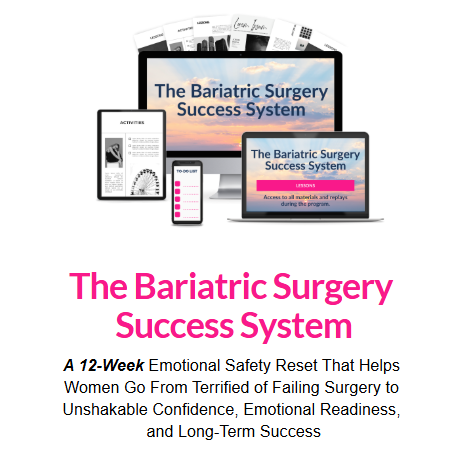
The Bariatric Surgery Success System
A 12-week Emotional Safety Reset designed to help women go from terrified of failing surgery to unshakable confidence, emotional readiness, and long-term success. If you are not ready for one-on-one therapy — or want to supplement your care — this program was built for you.
Ready to Connect?
I offer specialized therapy for individuals navigating eating disorders, bariatric surgery, and perinatal mental health in the Waco, TX area. Whether you are seeking support for yourself or a referral partner for your clients, I would love to talk.
Serving Waco and surrounding areas | 254-221-6829 | hannahshort@rootedandnourishedtherapy.com
HS
Hannah Short
LCSW, CMNCS, BCBC, CCM | Waco, TX
Hannah is a Licensed Clinical Social Worker specializing in eating disorders, bariatric surgery counseling, and perinatal mental health. She serves individuals and families in Waco and the surrounding areas, and welcomes referrals from providers across Central Texas.

Social
Nav
Therapy in Waco, Texas
Subscribe to Between Sessions
A monthly note for women in Waco and Central Texas who see themselves in these words — motherhood, body image, and the tender in-between.
